
1 Killing site(s)
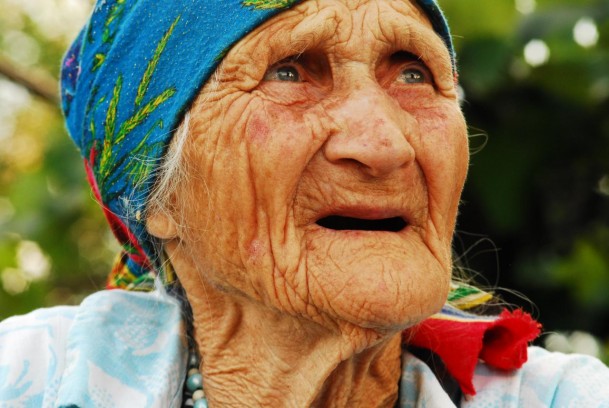
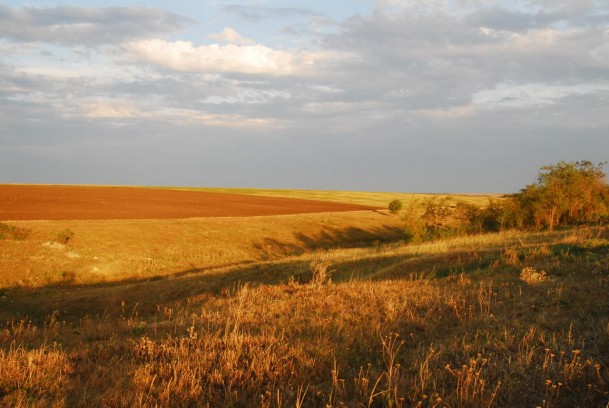
Anna Z., born in 1927: "The Jews were brought to Antoniuky. Although I do not know exactly where they spent the night, I believe they were held inside the school building because they were later marched toward the killing site from that direction. During the day, they were taken to the outskirts of the village, to the edge of the deep ravine where the livestock cemetery used to be and where the pit had already been prepared for them. I was in my yard when I saw them being marched there. As they walked, they held their children in their arms, and the children were weeping. There were many children among them." (Testimony N°YIU1566U, interviewed in Antoniuky, on August 11, 2012)
"In August 1941, a German punitive detachment arrested 19 Jews from Petrovka [today Petrivka] of Romanovsky Selsoviet [rural council], who had evacuated during the summer with their own horse-drawn carts [illegible]. All the rounded-up individuals were brought to the school [illegible] in the village of Antoniuky. The German commander arrived at the rural council and ordered the excavation of a pit two meters wide and six meters long in the livestock cemetery under the pretext of burying horse carcasses. The locals began executing the order and digging the pit. Toward evening, all the rounded up Jews, including men, women, and children of all ages, were taken out of the school and marched in the direction of Khrestaforovka. They were brought to the livestock cemetery where the pit had been dug, and there, all 19 individuals were shot. The people who had dug the pit were then ordered to fill in the livestock grave, which was located one kilometer and a half east of the village. […]" [Deposition of Naum S., native to Antoniuky, given to the Extraordinary State Soviet Commission (ChGK) on September 29, 1944; Copy USHMM RG.22-002M, Reel 6 (30), pp.11-12]
Antoniuky, located in the Berezivka district of the Odesa Oblast, lies approximately 128 km (79.5 mi) north of Odesa. Following the revolution, the region became part of the Ukrainian Soviet Socialist Republic. During the Soviet period, notably in the 1920s and 1930s, the area underwent significant agricultural development, leading to the re-organization of local settlements and the creation of collective farms (kolkhozes). The Berezivka district was therefore characterized by a significant presence of Jewish agricultural colonies alongside numerous ethnic German settlements inhabited by Volksdeutsche.
According to available sources and local witness interviewed by Yahad-In Unum, however, there were no Jewish residents living in Antoniuky on the eve of the Second World War.
Antoniuky, like the rest of the Berezivka district, was occupied by German troops in early August 1941 and, at the end of the same month, was transferred to the Romanian civilian administration as part of the Transnistria Governorate.
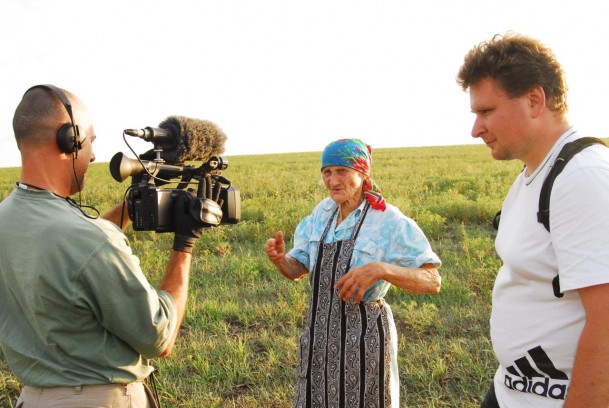
According to Soviet archival data, in August 1941, a German punitive detachment intercepted and arrested a group of Jews who were attempting to evacuate through the settlement of Petrivka. The arrested individuals were brought to Antoniuky and confined in the local school building. This information was confirmed by Anna Z., born in 1927, a local resident interviewed by Yahad-In Unum. One summer day, Anna witnessed this group, which included men, women, and young children, being marched under guard from the school toward the outskirts of the village. She followed the column to the killing site at the edge of a deep ravine near the livestock cemetery. Upon arriving, the victims were forced to undress, aligned in groups at the edge of a pre-dug pit, and shot by several executioners, after which the pit was filled.
Anna Z., who assisted the Yahad-In Unum team in identifying the location of the killing site, noted that the pit was situated within the perimeter of the livestock cemetery, approximately 50 meters away from the actual burial ground of the animal carcasses. While archival sources record 19 Jews killed in Antoniuky, Anna Z. estimated the actual number of victims to be higher, recalling that the pit was completely filled with bodies.
As for today, the killing site in Antoniuky remains uncommemorated.
Do you have additional information regarding a village that you would like to share with Yahad ?
Please contact us at contact@yahadinunum.org
or by calling Yahad – In Unum at +33 (0) 1 53 20 13 17