

1 Killing site(s)
Nadia M., born in 1933: "During the war, Jews living in the nearby settlement of Zarichanka were subjected to persecution. Because relations between different nationalities had been good before the war, some sought refuge with their Ukrainian acquaintances and friends.
In our own home, we hid a Jewish girl whose mother had once worked for my family. She was the same age as I was, so we pretended to be sisters. A neighbor of ours also hid a Jewish man in his cellar until the end of the war. Both the girl and the man survived.
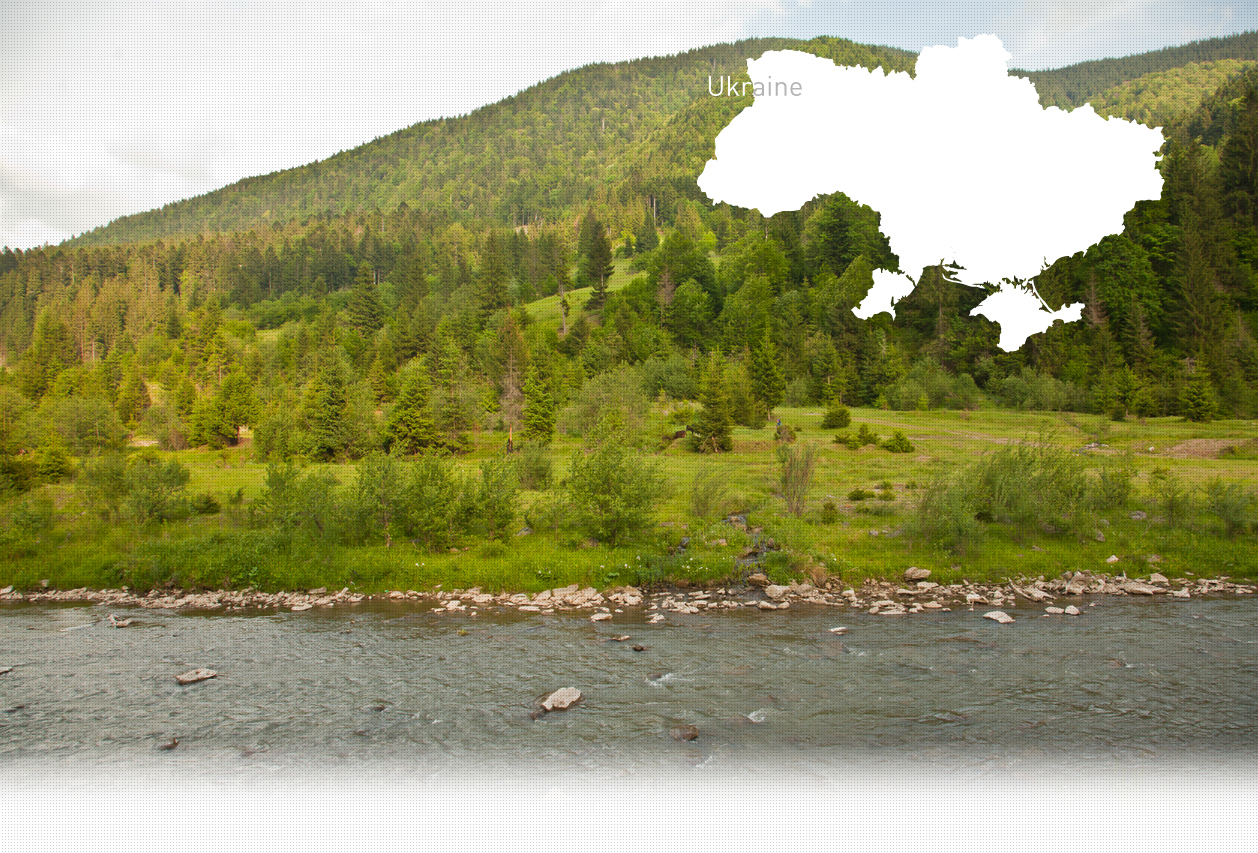
However, some Jews were killed during that period. I witnessed one such incident here in Draganivka one summer day. A Ukrainian policeman arrived on horseback, leading a young Jewish woman from Zarichanka who was tied with a rope. When she tried to escape, the policeman shot and killed her. He left her body in a ditch and rode away.
During the night, local men secretly retrieved her body and buried her in the Orthodox cemetery in Draganivka." (Testimony N°YIU2916U, interviewed in Draganivka, on July 14, 2021)
Zarichanka is located approximately 30 km (18.6 mi) northwest of Kamianets-Podilskyi, in the historic Podolia region. Known as Liantskorun until its renaming in 1946, the settlement originated as a private estate belonging to the Polish Lanckoroński family. The presence of a Jewish community dates back to the sixteenth century and is documented in 1765, when 609 Jewish residents were recorded.
Following the partitions of Poland, the locality came under Russian Imperial rule. By 1847, the Jewish population had increased to 1,069 inhabitants. The community reached its demographic peak at the turn of the twentieth century. According to the 1897 Russian Empire Census, Liantskorun had 1,893 Jewish residents, comprising approximately half of the total population.
At that time, the settlement functioned as a typical shtetl. Jewish entrepreneurs operated local taverns and flour mills, while most residents were engaged in handicrafts and regional trade. Religious life was structured around four synagogues and a network of cheders (religious schools), reflecting the strong presence of Hasidic traditions. At the beginning of the twentieth century, Zionist organizations also became active in the town.
This period of growth was disrupted between 1917 and 1921 during the Russian Civil War, when the Jewish quarter suffered from repeated pogroms carried out by various armed factions. These events, combined with Soviet administrative transformations, led to a demographic decline, and by 1926 the Jewish population had fallen to 1,155.
Testimonies collected by Yahad-In Unum provide insight into the final years of the community before the war. According to Vasyl M., born in 1934, Jews lived primarily in the town center and were employed as merchants, artisans, and members of local cooperatives. A Jewish section also operated within the village kolkhoz (collective farm). Vasyl M. recalled two Jewish women named Khaika and Basia, while another witness, Nadia M., born in 1933, remembered a woman named Etia who was known locally for baking bread. Religious observance remained strong, with a separate Jewish school and the continued practice of holidays, weddings, and burials according to Jewish tradition.
By 1939, on the eve of the Second World War, the Jewish population of the town numbered approximately 915 individuals.
Zarichanka was occupied by German troops on July 9, 1941. Shortly thereafter, a new administration was established in the town. Although German forces were not permanently stationed there, a local auxiliary police unit was formed to enforce occupation policies.
Anti-Jewish measures were introduced soon after the occupation. According to Vasyl M., born in 1934 and interviewed by Yahad - In Unum, Jews were required to wear distinctive yellow patches on their chests and shoulders and were prohibited from engaging in work or trade. Available sources indicate that a ghetto was established within weeks in the area of the marketplace, where the Jewish population was confined. Ghetto inmates were subjected to forced labor.
In the summer of 1942, the Jews of Zarichanka were relocated to the Kamianets-Podilskyi ghetto, where they were later murdered alongside Jews from surrounding localities. However, sources diverge regarding the course of events within Zarichanka itself and the exact nature of the deportation process.
Some accounts state that in July 1942, armed units surrounded the town, entered Jewish homes, and killed those found inside. By contrast, Vasyl M. recalled that the Aktion occurred during the harvest season in August 1942 and was carried out by German forces assisted by local police. According to his testimony, Jews were first assembled within the town, while those attempting to flee were killed at various locations.
Despite these discrepancies, sources agree that many victims were buried in a pit located near the present-day marketplace. Vasyl M. identified the site as a pre-existing potato storage pit situated in a field. A memorial now stands at this burial location.
An alternative account was recorded by Jody Shaw, whose paternal family emigrated from Zarichanka to the United States in the early twentieth century. During a visit to the town in 2007, she interviewed a local resident who reported that a group of Jews had been assembled and forced to dig a large pit behind the site of a modern-day store before being shot at its edge. The witness stated that the ground reportedly continued to move for several days afterward. Shaw further noted that the current memorial does not mark the exact location of this pit. This testimony may indicate either a separate execution from the one described by Vasyl M. or an additional killing site associated with the same Aktion.
In addition to the main Aktion, isolated killings of Jews occurred throughout the summer. This is corroborated by the testimony of Nadia M., born in 1933, who witnessed the shooting of a young Jewish woman from Zarichanka in the nearby village of Draganivka.
A number of Jews from Zarichanka survived the occupation with the assistance of local residents, who sheltered them either within the town or in surrounding settlements.
For more information about the killing of Jews from Zarichanka in Kamianets-Podilskyi please follow the corresponding profile.
Do you have additional information regarding a village that you would like to share with Yahad ?
Please contact us at contact@yahadinunum.org
or by calling Yahad – In Unum at +33 (0) 1 53 20 13 17