

_793_924.jpg)

1 Killing site(s)
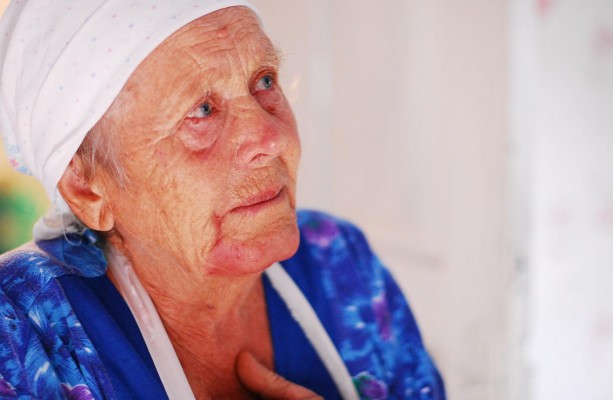
Hryhoriy B., born in 1928:
"Witness: The Jews were brought here in January 1942. It was -35°C. A policeman came to my house and told me: "Hitch up your horses and go to the Berezovka [today Berezivka] station!" I asked him: "What for? What am I going to do there?" He replied: "You will receive instructions." In total, twelve sleds from our village [of Sofiivka] had been requisitioned to do this. There was an enormous amount of snow and it was very cold, yet we did not have adequate clothing to cover ourselves. We had not the slightest idea of what we were going to do. We had reached the Berezovka station around ten in the morning. Then, they told us that people were being transferred. They did not specify that they were Jews [from Odesa]; they only said that these people were being moved toward the Bug but would stay here for a short while first. When the train finally arrived, the people it brought were totally exhausted. They had certainly been mistreated in Odesa. There were essentially women and elderly people in their fifties.
Y. U.: And the children?
Witness: The children too, even very small ones. It was bitterly cold, perhaps -32°C or -35°C, I no longer remember exactly. We were ordered to load as many people as possible onto our sleds. Twelve people, mostly women, got onto mine. There were also two men and a boy. I asked: "Where do I take them?" and was told: "Take them to your village." While a number of Jews were transported on sleds, those who were supposedly stronger had to go on foot. But there was no one strong! Imagine it: -30°C and their clothes were frozen! They kept falling down. The road we took was truly frightening because it was strewn with bodies. […]
During this time, the policemen and gendarmes requisitioned our local women to cut down trees to make stakes. Later, those stakes were used to surround the empty stables. The villagers worked outside all night, first surrounding the cowsheds with barbed wire and then fencing off the entire territory of the village. They were building a ghetto." (Testimony N°YIU1571U, interviewed in Sofiivka, on August 13, 2012)
"On March 22, 1942, Soviet citizens displaced from Western Ukraine and the city of Odesa were shot. The shooting was carried out beyond the village of Sofiivka, on the eastern side, about one hundred meters from the house of Trofym Virytch, in the ravine. The executioners were German colonists, numbering 10, led by a German officer. The German colonists came from Tartakai. They shot the Soviet citizens in the back with rifles. In total, more than 300 people were shot, including small children, women, the elderly, and men. In all, there were 140 children. Before being shot, everyone had to undress down to their underwear, and all the clothing and items they left behind were taken by the German colonists. The bodies of those who were shot (some of whom were only wounded), were first covered with hemp, then doused with flammable liquid and burned." [Act No. 13 drawn up by the Extraordinary State Soviet Commission (ChGK), on October 10, 1944, in the village of Sofievka [today Sofiivka], part of the Gouliayevka [today Huliaivka] Village Council in Berezovka district; Copy USHMM RG.22-002M, Reel 6 (29), p.33]
Sofiivka, located in the Berezivka district of Odesa Oblast, lies approximately 96 km (59.6 mi) northeast of Odesa.
In the 19th century, the area formed part of the Kherson Governorate of the Russian Empire and was included in the zone of Jewish agricultural colonization established by the tsarist authorities. The Berezivka district was also characterized by a significant presence of ethnic German settlers (Volksdeutsche).
Following the Revolution, the region became part of the Ukrainian Soviet Socialist Republic. Although several Jewish agricultural colonies existed in the wider Berezivka area, according to available sources, there was no Jewish residents living in Sofiivka on the eve of the Second World War.
Sofiivka was occupied by German troops at the beginning of August 1941 and, at the end of the same month, was transferred to the Romanian civilian administration as part of the Transnistria Governorate. A new administration was established shortly afterward, including a local auxiliary police unit.
In the winter of early 1942, numerous Jews were deported to Sofiivka. According to the Yahad-In Unum witness Hryhoriy B., born in 1928, approximately 2,000 Jews, primarily women, children, and the elderly, were gathered in Sofiivka over the course of several days. While most were from Odesa, the group also included Jews from Western Ukraine and Bessarabia. Local inhabitants were requisitioned with their carts to meet the deportees at the Berezivka station, located approximately 23 km (14 mi) away. Although the weakest individuals were transported on these carts, the majority of the Jews were forced to make the trip on foot. Due to the extreme cold and exhaustion, many died along the route. In Sofiivka, some Jews were placed in empty stables surrounded by a fence, while others were housed with local residents. The Jews could enter the village to barter valuables for food, while local residents also frequently brought food to those held in the stables.
On March 22, 1942, or March 29 according to Hryhoriy B., Romanian Gendarmes assembled the first column of several hundred Jews and marched them toward a ravine on the outskirts of Sofiivka for execution. Those who were too weak to walk were shot in the village itself and their bodies were transported to the ravine on carts. Upon arrival at the killing site, the victims were forced to undress and were led in groups to the edge of the ravine, where they were aligned and shot in the back of the head. The shooting was carried out by a unit of German colonists known as Volksdeutsche from Tartakai, acting under the supervision of a German officer. While the first group was being shot, another column of Jews was formed in Sofiivka and brought to the same location to continue the Aktion.
According to archival records, over 300 people were killed during this Aktion, including children, women, and the elderly. However, the Yahad-In Unum witness Hryhoriy B. stated that over 1,000 Jews were shot in a single day, while other local sources estimate the number of victims in Sofiivka as high as 1,500 people.
Following the shooting, the German colonists seized the victims’ best belongings and left. According to Hryhoriy B., after the departure of the Germans, local inhabitants pulled those who were only wounded out of the pit. Subsequently, the bodies were covered with hemp, doused with flammable liquid, and set on fire, a process that lasted four days.
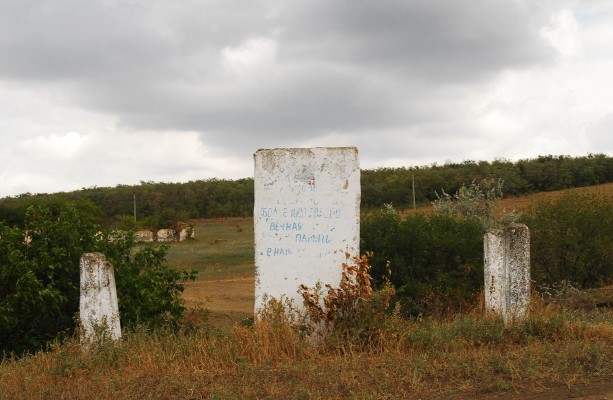
Approximately 100 Jews discovered after the shooting in Sofiivka were brought to Mostove, where they were shot. At the same time, some Jews remained in hiding with the help of local residents and managed to survive the war. Hryhoriy B. personally helped two Jewish sisters escape during the shooting. They were then hidden at the house of another Yahad-In Unum witness, Nadia K., born in 1926. One of these survivors, Lyusia (or Lyuba), returned to Sofiivka years later and initiated the commemoration of the site. Subsequently, a monument dedicated to over 1,000 Jews was established on the top of the ravine, approximately 5 meters away from the pit, by Hryhoriy B. and local inhabitants.
Do you have additional information regarding a village that you would like to share with Yahad ?
Please contact us at contact@yahadinunum.org
or by calling Yahad – In Unum at +33 (0) 1 53 20 13 17