
.JPG&f=jpg)
.JPG&f=jpg)
.JPG&f=jpg)
.JPG&f=jpg)
.JPG&f=jpg)
1 Killing site(s)
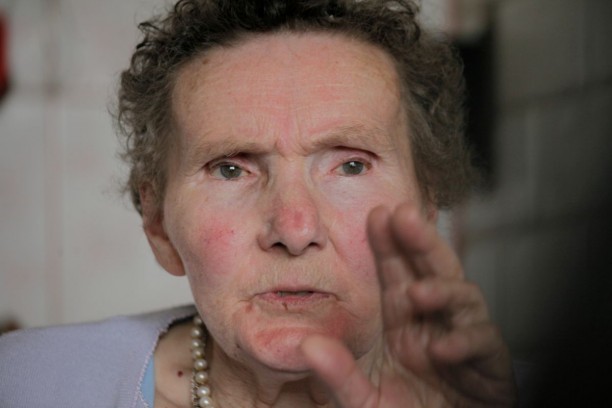
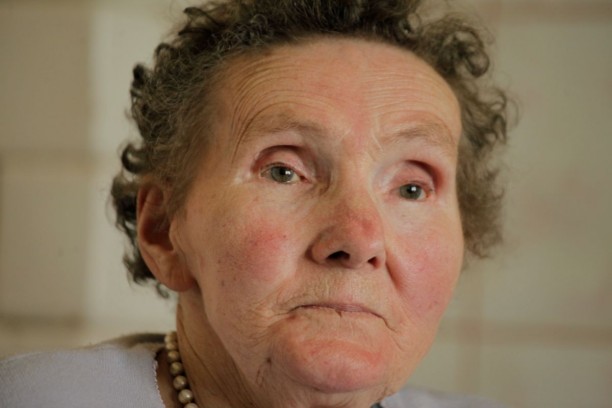
Franciszek S., born in 1933: "I saw it myself—cart after cart passing by, filled with men, women, and children all crowded together. The local Polish drivers, ordered by the village head, were the ones moving them, but the Germans and gendarmes were always there, guarding the wagons so no one could escape. At the time, we didn’t fully understand what was happening, but people were already whispering that it was the end of their lives, that they were being taken to be killed.
The killings went on all summer. While I only saw that long line of horse-drawn carts once, the trucks were a different story—they drove by every day, carrying what people said were the more educated victims. They were all taken to the forest we call Giełczyniak. I didn’t see the executions as they happened, but I saw the trucks going in and I could hear the constant sound of the shots. Later, in the spring, they began burning the bodies in the forest, stacking layers of people and branches to create massive fires that lasted for several days." (Witness N°307P, interviewed in Podgórze, on May 10, 2014)
Village of Giełczyn, Łomża County, Białystok Voivodeship.
Deposition of Franciszek Kozłowski, 50 years old, resident of the village of Zawady, profession unknown, dated October 10, 1945. He bases his testimony on his own observations as well as those of the inhabitants of the commune.
Questionnaire on Mass Executions and Mass Graves
1. Date and place of execution: July 15, 1942 – April 1, 1944; village of Giełczyn, National Forest section 66 (Lasy Państwowe oddz. 66).
2. Type of execution (shooting, hanging, or other): Victims were shot or buried alive.
3. Data concerning the executed victims:
Poles, Jews, foreigners: 7,000 Jews and 5,000 Poles.
Number of persons executed: 12,000.
Origin of the victims: Victims were transported by the Gestapo from throughout the entire Łomża county.
Name, age, profession, and address: [Not provided].
4. Is it known what the victims were accused of, or was the execution an act of reprisal or other: Motives unknown.
5. Who carried out the execution? (Gendarmerie, Gestapo, SS, police, Wehrmacht): The Gestapo.
6. Are the names of the perpetrators known? Provide names: Unknown.
7. Were the bodies burned? Or destroyed in another manner? In what location: Before the German departure in August 1944, the bodies were burned in order to destroy the evidence.
8. Where were the corpses buried? Exact location: The bodies were first buried in the Giełczyn forest, then later burned (see question 7).
9. Description of the grave(s) (dimensions, probable number of victims per grave): 4 graves with dimensions of 4x4x4 meters, and several others for which the number is difficult to specify.
10. Has an exhumation of the bodies been carried out? Was there an official report at the site of the grave: No exhumation was carried out because the bodies were burned.
11. Are there reasons to request a future exhumation? No.
[source: RG-15.019M Reel#1 (pp. 231-230 of the PDF)]
Giełczyn is a village in the administrative district of Gmina Łomża, within Łomża County, Podlaskie Voivodeship, in north-eastern Poland. The village is located at the north-eastern edge of a large forest complex known as the Red Wood (Czerwony Bór), a place of Polish and Jewish martyrology during the Second World War.
Giełczyn was, and remains, a small agricultural village, and there is no clear evidence that a larger, permanent Jewish community existed there before the war. In such villages, Jews sometimes lived individually, for example as traders or craftsmen, but they usually did not form large communities.
In contrast, nearby Łomża, located just a few kilometers away on the Narew River in northeastern Poland, had a significant and well-established Jewish population before the war. Jews made up a substantial portion of the town’s residents and maintained a vibrant community, with synagogues, schools, and cultural institutions. On the eve of World War II in 1939, Łomża had roughly 8,000–9,000 Jewish residents. This represented about 35–40% of the town’s total population, making Jews one of the largest and most significant communities in the city at the time.
Between September 1 and 9, 1939, nearly 1,000 residents of Łomża were killed in German aerial bombardments. Following a brief occupation on September 10–11, German forces deported approximately 500 Jewish men to a labor camp near Königsberg, where almost all perished. Under the Molotov–Ribbentrop Pact, the town was then ceded to Soviet control until the outbreak of Operation Barbarossa in June 1941, when German forces re-entered on June 24–25. At that time, German records estimated the Jewish population of Łomża at between 7,500 and 9,000, while survivor accounts placed the figure as high as 12,000, including roughly 1,000 refugees from Jedwabne, Miastkowo, and Śniadowo.
Following the occupation, anti-Jewish measures were implemented immediately, including the forced wearing of distinctive yellow patches and the imposition of compulsory labor. Mass killings of Jews began as early as July 1941 at Giełczyn, at the former Soviet munitions testing range in the Czerwony Bór Forest on the outskirts of Łomża. The forest served as a primary site for the systematic mass murder of both Polish Jews and Poles. Between July 1941 and September 1944, approximately 7,000 Jews were killed at this location and buried in pits dug by requisitioned locals. In addition to Holocaust victims, the site was also used to eliminate Polish political prisoners and members of the local intelligentsia, resulting in a total of roughly 12,000 deaths.
The first large-scale shooting in the forest was carried out by the SS on July 4, 1941, resulting in the deaths of 50 to 150 Jewish men. Between July 6 and July 20, 1941, an additional 1,000 to 2,000 Jews, predominantly men, were shot at the same location.
Following the initial mass killings, a Judenrat (Jewish Council) and a Jewish police force were established. In early August 1941, all Jewish residents were forced into the Old Jewish quarter of Łomża, where a ghetto was created. Overcrowding intensified as refugees from the surrounding area were added to the ghetto population. In early September, between 250 and 300 Jews from Piątnica and Łomżyca were also relocated to the ghetto. Yahad witness Celina O., born in 1928, helped provide milk to ghetto detainees through a woman who had “access to the restricted area.” Ghetto prisoners were subjected to forced labor both in internal workshops and at various external sites.
The scale of the killings in the Giełczyn Forest, which ranged from small groups to large-scale Aktions, increased throughout the occupation period. On August 16, 1941, German authorities conducted a population survey and demanded a contribution of 25 kilograms of gold. Subsequently, 200 individuals were arrested and shot in the forest. Another large-scale operation aimed at reducing the ghetto population occurred on September 1 or 17, 1941, possibly during the holiday of Yom Kippur. During this time, between 500 and 2,000 Jews deemed unemployed were killed at the same location.
Franciszek S., a local witness born in 1933 who was interviewed by Yahad in Podgórze, recalled seeing Jews transported daily by carts and trucks to the forest, known locally as Giełczyniak. He described the events as follows: “There was a huge pit in the forest. Germans would bring Jews there by truck to shoot them. Day after day, the trucks came, and I could hear the shots.”
On November 2, 1942, the Jews of Łomża, along with those found in hiding in the following days, were deported by the SS and Ukrainian auxiliaries to the Zambrów transit camp, located 27 km (17 mi) south of the town. Approximately 17,500 to 20,000 Jews from the surrounding area were gathered at the Zambrów site before being subsequently deported to the Auschwitz killing center.
By the end of the war, as the Red Army approached, German forces initiated Operation 1005 to conceal evidence of mass killings in the Giełczyn Forest. This operation, which involved exhuming and cremating the remains of victims, was carried out by requisitioned Polish inmates from the Łomża prison. Franciszek S. recalled the process: “Later, in the spring, they began burning the bodies. The front was moving, the Russians were approaching, so they [the Germans] would lay a layer of people, then branches on top, and burn everything. They burned those people for several days. Everything, so there would be no traces.” After completing the task, the Polish prisoners were also shot and buried at the site.
Historical records and archaeological evidence indicate that the Giełczyn Forest landscape contains four primary pits, each measuring 4 by 4 meters, alongside two wells and numerous additional killing and burial sites. While the total number of these sites is difficult to determine precisely, archival documents and survivor accounts identify the center of the forest as the primary location of the mass shootings.
This central zone is situated near the site of the 1967 memorial. Currently, three monuments stand in the Giełczyn Forest. Although erected at different times, each is located at a site directly linked to the mass killings committed within the forest.
Do you have additional information regarding a village that you would like to share with Yahad ?
Please contact us at contact@yahadinunum.org
or by calling Yahad – In Unum at +33 (0) 1 53 20 13 17