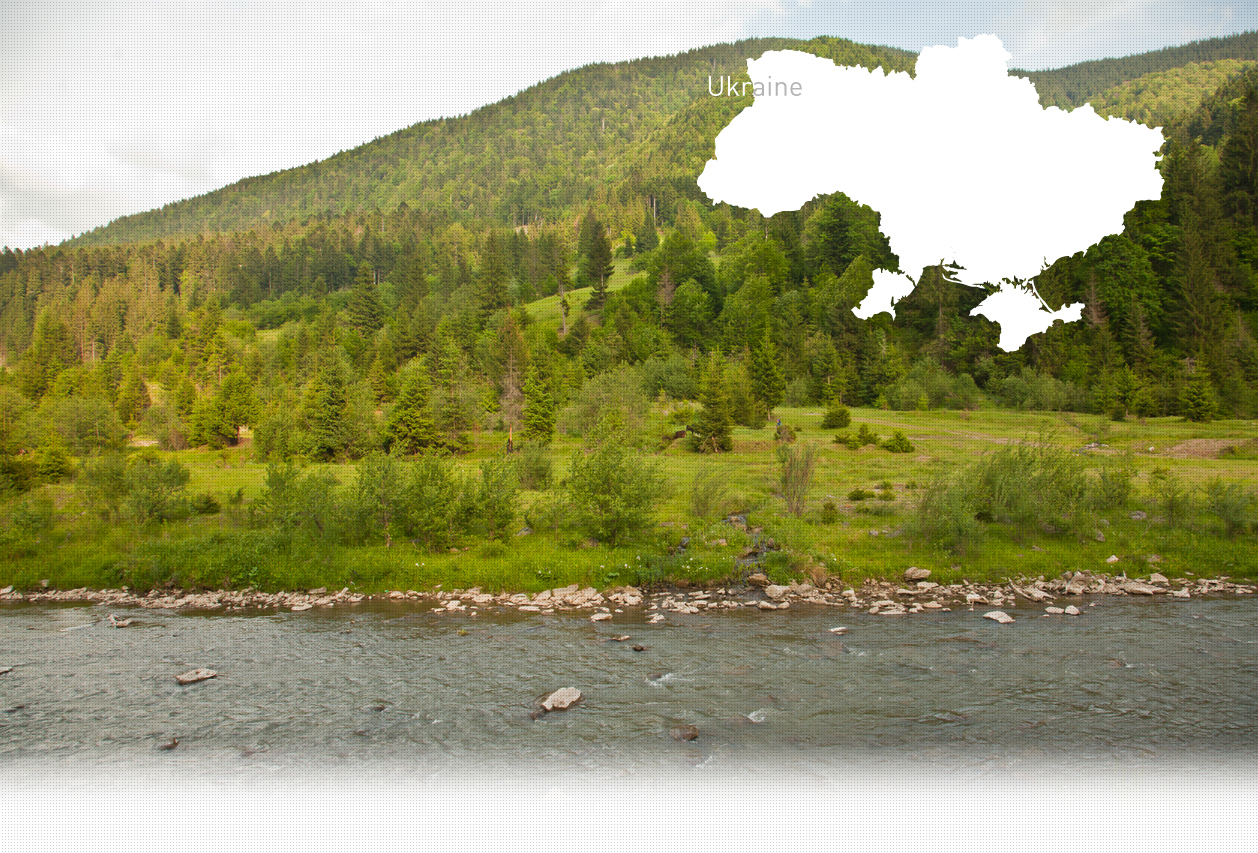


1 Killing site(s)
Klymentiy K., born in 1937: "Jews from elsewhere were brought here, I don’t know where from. They were brought in groups of fifty or sixty. The elderly people in the village said that there were three groups shot in total. They were led here, to the silos where corn was mainly stored, the guards looted their valuables and shot them. Later, after the war, when we grazed cows here, we could see these silo pits, the earth had sunk. After the war, the kolkhoz no longer used them for silos." (Testimony N°YIU347U, interviewed in Nova Ilyinka, on July 24, 2006)
"[…] During the German Romanian occupation of the commune of Ochakovskoye [today Ochakivske], from August 12, 1941, to March 29, 1944, the following atrocities were committed.
On February 20, 1942, 1,150 Jews were brought from the city of Odesa and locked up in barns in villages in the municipality of Ochakovskoye where they were forced to live in unbearable conditions. The guards were ordered not to let them out and not to give them anything to eat or drink. As a result of this treatment, many died of hunger and cold. Under the pretext of sending them to work at the sovkhoz, the executioners took all the Jews who had survived to the Mostovoye [today Mostove] railway siding and shot them all, down to the last one. They threw the bodies into a deep well, poured flammable liquid over them, and set them on fire, throwing the children who were still alive and those who had not died instantly into the flames. In addition, in the hamlet of Novaya Ilyinka [today Nova Ilyinka], at the same time, i.e. in February, 400 Jews were tortured to death and shot in a grain pit. […]" [Act No. 5 drawn by the State Extraordinary Soviet Commission (ChGK), on June 21, 1944, 455-456; GARF 7021-68-178/Copy USHMMRG.22-002M]
Nova Ilyinka was a village in the Mykolaiv region located 30 km (18 mi) from Voznesensk. The village disappeared in the 1990s following the departure of the population to the cities.
No census records indicate the presence of a Jewish population in the village. According to Klymentiy K., born in 1937, there were no Jewish residents in this village before WWII.
Nova Ilyinka like other localities in the district, was occupied by German troops in August 1941 and subsequently transferred to Romanian administration.
According to Soviet archival records, in February 1942, 400 Jews from Odesa were tortured to death and shot in a grain pit in Nova Ilyinka. This information is corroborated by the testimonies of Klymentiy K., born in 1937, and Anatoliy Z., born in 1924, interviewed by Yahad-In Unum. Anatoliy Z. recalls that a column of Jews was brought to Nova Ilyinka during the winter. They were on foot, walking through the snow. In the village, they were housed in two empty houses, where they remained for approximately two months. During that period, they were allowed to move freely within the village and were able to barter food in exchange for their clothing.
Toward the end of winter, during the thaw, German colonists arrived in Nova Ilyinka. Known as Volksdeutsche or ethnic Germans, they came from the Lunacharsky colony. Several local residents were then requisitioned to transport hay to the silo pits, which were pre-existing agricultural storage pits belonging to the kolkhoz (collective farm). According to Klymentiy K., there were two such pits, which were relatively shallow and measured approximately 1 to 1.5 meters deep. Shortly after the transport of the hay, a Volksdeutsche went through the village and issued an order forbidding local residents from leaving their homes. The Jews were then taken to the silo pits where they were shot. Anatoliy Z. recalled hearing cries followed by the sound of gunfire. According to reports, three separate groups of Jews were shot at this killing site.
On that same day, shortly after the shooting, the victims’ bodies were covered with hay and burned, causing a smell that spread throughout the village. That same evening, the perpetrators returned to their own village.
As of today, the killing site remains not commemorated.
Do you have additional information regarding a village that you would like to share with Yahad ?
Please contact us at contact@yahadinunum.org
or by calling Yahad – In Unum at +33 (0) 1 53 20 13 17