
1 Killing site(s)
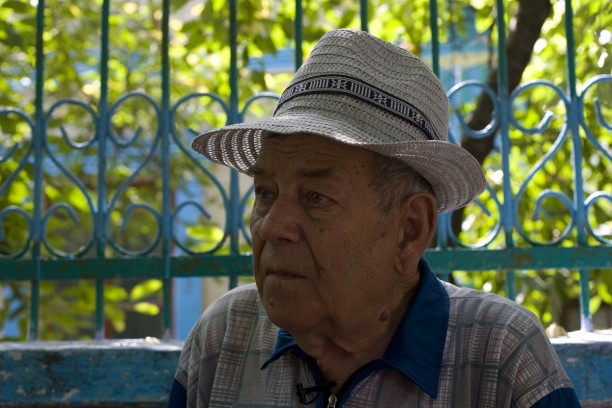
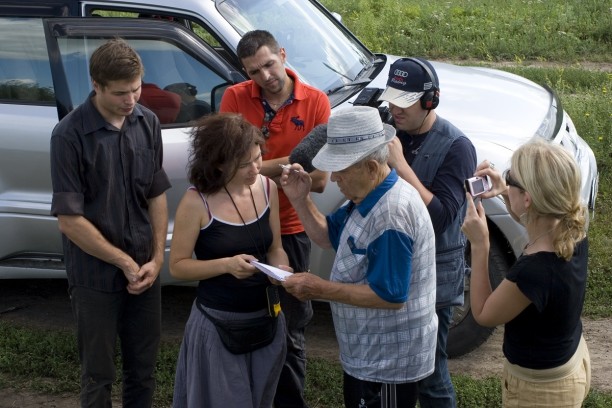
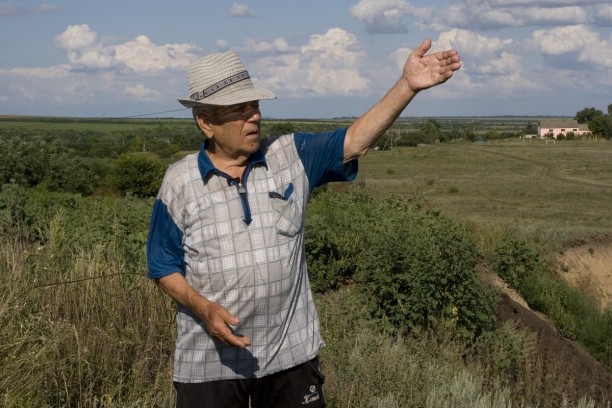
Petro S., born in 1928: "Several columns of Jews were brought to Hradivka by German soldiers and then transferred into the custody of the Romanians. They always came in winter; the snow was up to their knees and they were barefoot. Some had frostbite and even lost toes while walking, without even realizing it. I would go with other children with a sled to meet the column to help them, because if they fell, they were immediately killed.
Sometimes they asked me: "Is Vapniarka far?" It was the name we gave to the lime quarry. "We are going to work there." Some of them spoke Russian or Ukrainian, those from Odesa or Vinnytsia; those from Romania spoke Romanian.
When they arrived in the village, they were locked in the stable. My mother told me to take buckets of hot water and bring it to them to warm them a little. We had no food to give them; we ourselves had nothing to eat. The guards allowed me to enter the stable, but only during the day. They stayed there for three or four days, then were taken to the lime quarry by German colonists and shot." (Testimony N°YIU1266U,interviewed in Hradivka, on August 1st, 2011)
"[…] Gradowka [today Hradivka] was a so-called "Rugsendorf." The ethnic Germans were settled there along a street situated right on the outskirts of Munich.
I know that in Gradowka (Neudorf), even after our arrival, thousands of Jews were killed. This may have taken place in the summer of 1942. The Jews were driven in from all directions and shot at a lime kiln near Gradowka, and then burned in the kiln. I was never an eyewitness, but I heard the shooting and later noticed the rising smoke.
The Selbstschutz [self-defense] of Gradowka and other communities had to take part in these actions. Whether they were also required to shoot people directly, I cannot say. My husband also belonged to the Selbstschutz in Gradowka. Whether he played a leading role there, I do not know. He never told me anything about his activities.
Of the Jews who were shot near Gradowka, it was said that they were very wealthy. They must have worn a great deal of jewelry, which was taken from them before the execution. This jewelry had to be delivered to the command headquarters in Rastadt. […]
I was also told that Hartung and Petersen took the small and very small children from their mothers’ arms and shot them with their pistols.
I must correct myself. While the Selbstschutz man shot the mother, it is said that Hartung and Petersen, at that same moment, shot the children being carried in their mothers’ arms, so that mother and child were killed at the same instant and fell into the oven together. […] " [Deposition of Lydia Büchler, born on October 5, 1921, in Rastadt/USSR, at the criminal police station. Taken in Kleve on May 21, 1968. BARch162-2310,pp.4-5.]
Hradivka is a village in the Mykolaiv Region located approximately 36 km (22 mi) from Voznesensk. The village was founded around 1810 by German colonists as part of the agricultural colonization policy of the Russian Empire. It was originally named München, after the German city of Munich. The population was predominantly German, with a strong Catholic majority and a smaller Protestant community. Due to agricultural development and state support, Hradivka experienced steady demographic growth throughout the 19th century.
After the Russian Revolution of 1917, the region came under Soviet control. Agricultural collectivization, religious restrictions, and the loss of cultural autonomy were the consequences for the local population which began to decline.
There is no reliable prewar evidence of a Jewish presence in the village on the eve of the WWII.
Hradivka, formerly known as München, was occupied by German forces in August 1941 before subsequently being transferred to Romanian rule.
German archival sources indicate that mass killings of Jews took place in the village at the beginning of 1942. According to the research of Oleksandr Kruglov, in early February 1942 approximately 2,000 Jews deported from Odesa were shot in München (Gradovka), and approximately 800 more at the end of the same month. Additional shootings were recorded on March 2, 1942, when a "self-defense" German unit shot 500 Jews from Odesa, and on April 25, 1942, when another 600 Jews were murdered in the same locality.
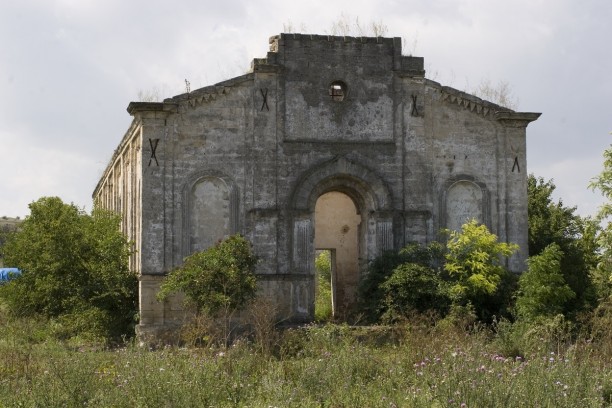
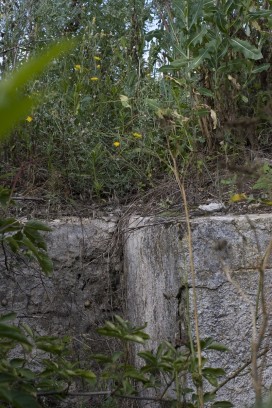
Testimony from a local witness, Petro S., born in 1928, suggests that these killings were not separate events but formed part of a continuous process. Petro recalled that several columns, each consisting of several hundred Jews, were brought to the village on foot. Often arriving in winter, they were exhausted, barefoot, and suffering from extreme cold; those who collapsed along the way were immediately shot. According to his testimony, upon arriving in Hradivka, they were confined in the village stables. The Jews, including men, women, children and the elderly, generally remained there for only three to four days, or sometimes longer, under guard. During this period, local inhabitants occasionally brought them hot water, yet many detainees died from cold and exhaustion. Their bodies were transported to the lime and clay quarry located south of the village, not far from the stables.
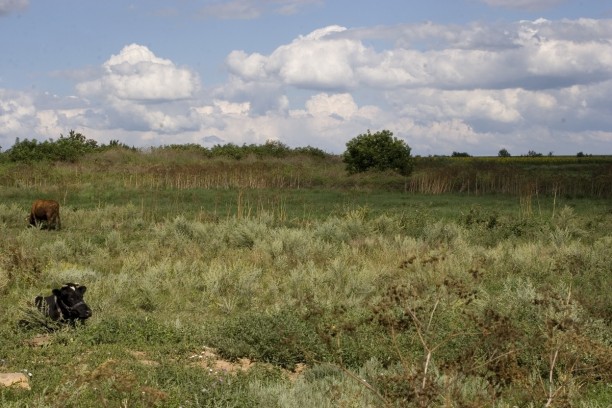
Following the period of detention, those who survived were also taken under armed escort to the same quarry to be shot. While most Jews were brought to there on foot, those unable to walk were transported there by sledges or carts provided by the kolkhoz (collective farm). Upon arriving at the killing site, the victims were forced to undress and were then marched in small groups to the edge of the quarry. Others waited nearby, surrounded at a distance of approximately 15 meters, and were able to see the shootings. The victims were shot at close range, and their bodies were thrown into the quarry by other Jews.
Both testimonies and archival documents confirm that the shootings themselves were carried out with the involvement of the Selbstschutz, a self-defense unit composed of ethnic German colonists. According to Petro, these men were Volksdeutsche specifically from Rastadt (today Porichchya).
Clothing, shoes, and valuables taken from the victims were collected and transported by cart to the command headquarters in Rastadt.
After the shootings, hemp was placed in the quarry and set on fire; the bodies burned for several days. After some time, new columns of Jews were brought to the village and subsequently shot and burned. According to Petro, this process continued for a considerable period, likely spanning two winters. The total number of Jewish victims murdered in Hradivka is estimated at 3,900.
After the return of Soviet forces, clay was once again extracted from the quarry for construction purposes. No memorial has been established at the site to date.
Apart from the Jewish victims, a labor camp for Roma deported from Romania was established in the vicinity of Hradivka. According to a Romani survivor, Elisabeta, born in Bruiu in 1936, many detainees died there from hunger and typhus.
Do you have additional information regarding a village that you would like to share with Yahad ?
Please contact us at contact@yahadinunum.org
or by calling Yahad – In Unum at +33 (0) 1 53 20 13 17