

1 Killing site(s)
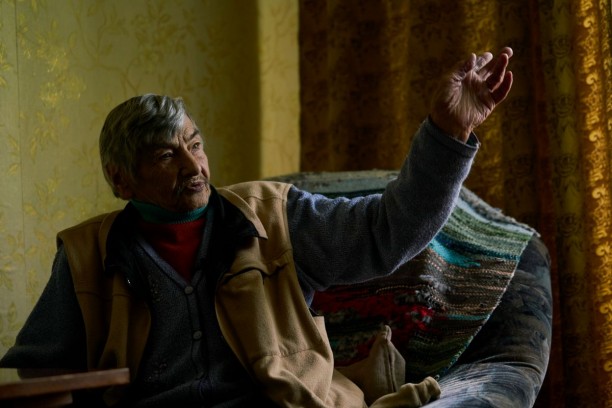
Vija B., born in 1935: "Before the war, I used to go to Blāzma from time to time, because that’s where the shops were. I remember Rafaël Sons, a Jewish doctor. He was a good doctor. The pharmacist there was also Jewish. Maybe there were other Jews in the village, but I don’t remember anyone else.
I do remember the Jewish traveling merchants. They came straight to people’s homes in the nearby villages, including Rūmciems, where I was born. Once, one of them even stayed overnight at our house. They sold clothing, fabrics, and spices you couldn’t easily find — things like cinnamon.
Before the Germans arrived, the Jews from Blāzma disappeared. I don’t know what happened to them. I heard that many Jews were taken to Ventspils. Later on, I saw groups of Jews being marched along the roads around here, in the direction of Dundaga." (Testimony N°YIU76LV, interviewed in Stikli, on September 4, 2021)
"[…] Bloody orgies took place throughout the entire period of the German occupation. The German brutes carried out mass arrests of the population, subjected them to torture, and killed them. They chose the town of Dundaga and its surroundings for this, as the center of mass extermination in the Ventspils district. [There] the Germans established five concentration camps, where they drove more than 6,000 civilians and Jews brought from various European countries, as well as around 1,000 partisans and Soviet POWs.
In the camp located at Jaundundaga, 1.5 km from Dundaga on the road leading to Melnsils, approximately 3,000 Jews were detained. 3-4 km from Dundaga, on the same road, up to 1,000 Jews were imprisoned in a second camp. On the road to Jaunvaldemārpils, 11 km from Dundaga, more than 1,500 Jews were held in a third camp. In addition, not far from the first camp, the Germans established another camp where they detained up to 1,000 partisans deported from Western Belarus, as well as Soviet POWs. Among the prisoners in this camp were approximately 1,000 civilian women and children. In all these camps, a regime of unprecedented cruelty was carried out to exterminate Soviet citizens. […]
Under grueling labor and starvation, epidemics of gastrointestinal diseases and typhus raged in the camps. Every day, carts and trucks carried the bodies of the dead, tortured, and murdered citizens to unknown destinations. People who were exhausted and no longer able to work, as well as the elderly, were either shot or killed outright by the Germans." [Act drawn by State Extraordinary Soviet Commission (ChGK), on June 25, 1945; pp. 8-14; GARF 7021-93-2394/Copy USHMM RG.22-002M]
Blāzma is located approximately 30 km (18.6 mi) southwest of Dundaga and 150 km (93.2 mi) northwest of Riga. According to testimony collected by Yahad - In Unum from Vija B., born in 1935, at least two Jewish families resided in Blāzma before the war. These included the family of Dr. Rafaël Sons and that of a local pharmacist. In addition, Jewish itinerant merchants regularly visited the surrounding villages, selling clothing, fabrics, and spices. In the summer of 1940, under the terms of the German–Soviet non-aggression pact, the Baltic States, including Latvia, were annexed by the USSR.
Blāzma and its surrounding area were occupied by German troops by the end of June 1941. The precise fate of the two Jewish families from Blāzma remains unknown. According to the testimony of Vija B., born in 1935, they disappeared shortly before the arrival of the Germans. It is possible that they shared the fate of other Jews from the Ventspils district: following the mass arrest order issued on July 19, 1941, Jewish residents were deported to Ventspils and murdered in the forest on the outskirts of the city together with other members of the regional Jewish community.
After the liquidation of the Riga, Daugavpils, and Liepāja ghettos in 1943, surviving Jews were transferred to the Kaiserwald concentration camp and its regional sub-camp network. By 1944, this system included five sub-camps in the vicinity of Dundaga, notably Dondangen I, Dondangen II, and Popervāle. These camps held approximately 6,000 European and Latvian Jews, as well as around 1,000 partisans and prisoners of war, under SS guard. Inmates were subjected to forced labor, including marsh drainage, forestry work, and the construction of military barracks and the Mazirbe railway line.
Conditions in the camps were extremely harsh, resulting in high mortality rates, with dozens of prisoners reportedly dying each day from exhaustion, hunger, and disease. In addition to these deaths, the area witnessed frequent summary executions and sporadic shootings of individual detainees. According to Vija B., columns of Jewish prisoners were marched in the direction of Dundaga, and some were killed and buried in the surrounding area.
Historical records indicate that a number of Dondangen inmates were murdered in the Puze Forest, near the former Parish Council House in Blāzma. In 2008, the Council of Jewish Communities of Latvia erected a monument at the site. The Latvian-language inscription commemorates the Latvian and European Jews from the Dundaga camps who were murdered there and at the Rakupe River in Amele in late 1944.
For more information about the killing of Jews in Dundaga, please consult the corresponding profile.
Do you have additional information regarding a village that you would like to share with Yahad ?
Please contact us at contact@yahadinunum.org
or by calling Yahad – In Unum at +33 (0) 1 53 20 13 17