
.jpg&f=jpg)
-2 (Copy).jpg&f=jpg)
-4 (Copy).jpg&f=jpg)


1 Sitio(s) de ejecución
Liudmyla M., born in 1932: "Before the war, a significant Jewish community lived here, mostly concentrated in the center of the colony. I would estimate there were about 800 Jewish residents, though I cannot be entirely certain since I was only a child at the time. I fondly remember my Jewish schoolfriend, Zoya Itskovych, who was exceptionally sharp at math. I also recall many of the local Jewish families, including Volko Biliard, the head of the Jewish kolkhoz [collective farm] known as ‘Kultneva’. During the war, he was captured by the occupiers and was likely killed, as he was never seen again. I know for certain that another Jewish man, who worked as a glazier, was also killed here. Only a few Jewish survivors returned to the village after the war. Among them was Semen Iakovych Spektor. He later married Zina Hryhoriivna Mendus, a Jewish woman whom my family had sheltered in our home for two weeks during the occupation. Another survivor was Hershko Solomonovych Flik, who managed to endure the war by adopting the false identity of Ivan Petrovych Shevchyk." (Testimony n°2083, interviewed in Andrievo-Ivanivka [today Chernove] , on June 1, 2016)
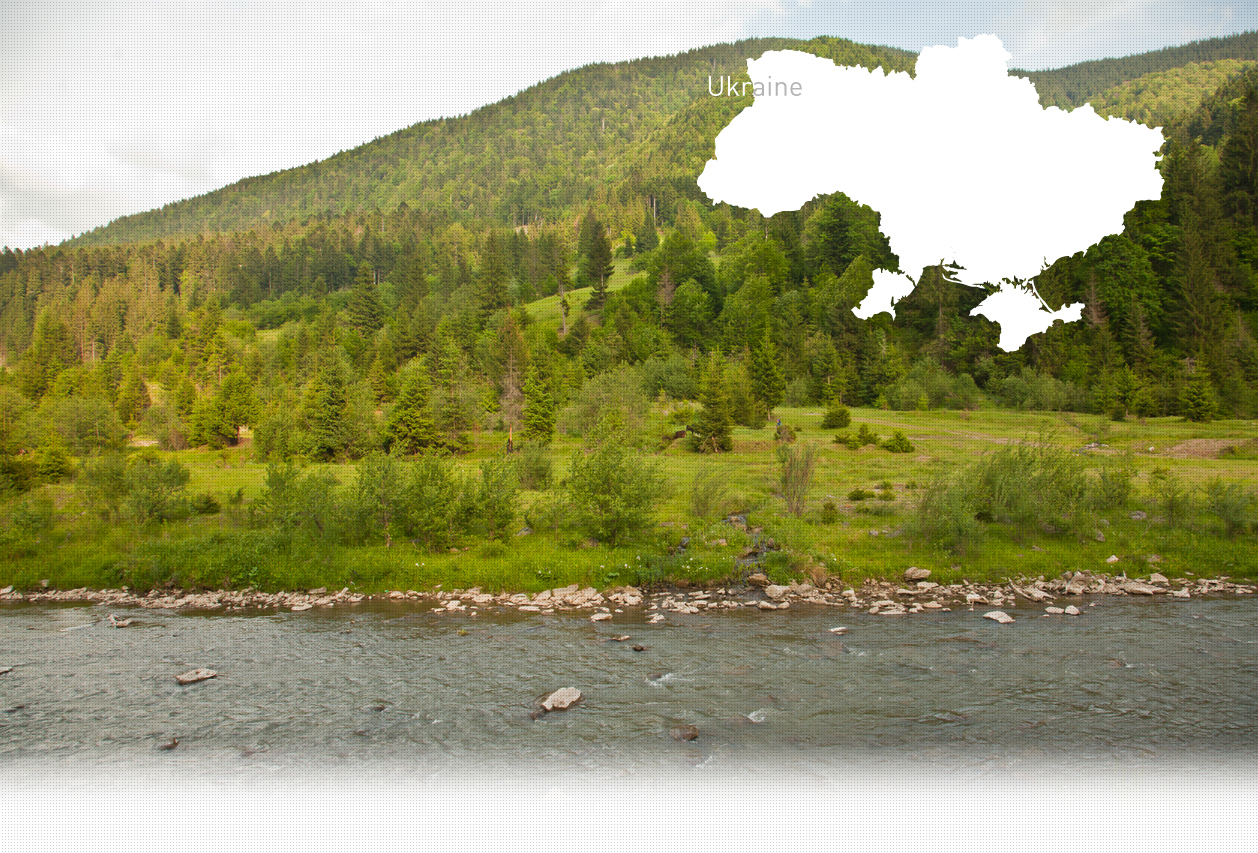
Chernove, a former Jewish agricultural center known as Kulykove Pole and later Andrievo-Ivanivka, is located approximately 135 km (83.8 mi) north of Odesa. It is situated in the present day Berezivka district of the Odesa Oblast. Before WWII, the village itself served as the administrative center of its own district.
Founded in 1792 following the region's incorporation into the Russian Empire, Chernove grew rapidly due to its position along a major trade route linking Odesa with Uman, Bila Tserkva, and Kyiv. In the early 19th century, it became a mestechko (market town), attracting Jewish merchants and artisans who drove local commerce and early industrial development.
By 1856, the town had 85 households, and a Jewish school was established by 1859. Population records track the town's steady late-century expansion: the 1886–1887 census recorded 935 residents, including 385 Jews (41.2%), while the 1897 All-Russian Census showed growth to 1,458 residents, including 546 Jews (37.5%).
Economic and communal infrastructure modernized further in the 1890s with the opening of the Baitalsky steam mill, the Shemoel butter factory, and Tokman's private pharmacy. Spiritual and community life centered around a local synagogue and a Jewish cemetery. Over time, the local workforce adapted to changing political eras; while many Jewish residents traditionally worked as independent craftsmen and merchants, a significant number later transitioned to a Jewish kolkhoz (collective farm) under Soviet rule. According to some sources, by 1939, the town's Jewish population stood at approximately 330 residents, while a local resident estimate their number to have been as high as 800.
Chernove, like the rest of the Berezivka district, was occupied by German troops in early August 1941 and, at the end of the same month, was transferred to the Romanian civilian administration as part of the Transnistria Governorate.
According to a local witness interviewed by Yahad-In Unum, Liudmyla M., born in 1932, a number of Jews attempted to evacuate at the beginning of the war. However, Soviet archival data and witness testimonies reveal that at least some of them were arrested and killed by the occupying authorities during their evacuation attempts. Thus, a group of approximately 30 Jews, including both adults and children, were shot in the nearby village of Petrivka [former Korneevo], while at least 19 others were killed in the village of Antoniuky. According to Liudmyla M., at least one local Jewish man was killed in the village, while other Jews were deported to Domanivka where they were killed. Only a small number of local Jews managed to survive the war by being hidden by the inhabitants of nearby settlements.
Starting in September 1941, Chernove also became a transit point for the mass deportation of Jews from other areas. The yard of the Romanian gendarmerie was turned into a holding site where several groups of Jewish deportees driven out of Moldova were temporarily contained before being marched further to Domanivka. On several occasions, Liudmyla M., alongside other local residents, brought food and water to the Jewish detainees in the gendarmerie yard, which they threw over the stone fence. Although she could not see the detainees behind the fence, she could clearly hear the children crying. According to Liudmyla M., the detainees never spent a long time in the yard before being taken further to Domanivka.
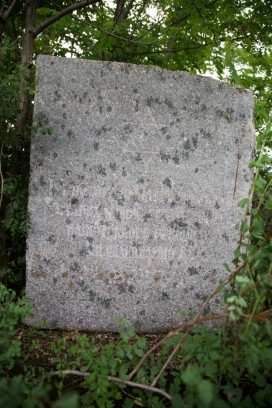
Today, a monument dedicated to over 100 victims of genocide, including women, children, and the elderly, stands at the Jewish cemetery in Chernove. The victims may include a portion of the local Jews, as well as deportees from the columns who were killed along the way because they were unable to keep up the pace.
¿Tiene información adicional con respecto a un pueblo que le gustaría compartir con Yahad?
Por favor contáctenos a contact@yahadinunum.org
o llamando a Yahad – In Unum at +33 (0) 1 53 20 13 17