

1 Killing site(s)
Volodymyr M., born in 1928: "Shortly before the war, we moved from Akmetchetka to Oktyabrskoye [former Zhovtneve, today Tsvitkove], where we stayed for a few months. At the village sovkhoz, there was a kind of assembly point where the authorities brought together large groups of Jews deported from Odesa and other places. We often saw groups of a hundred people or more being brought there. They were confined in the sovkhoz pigsties, where they slept on the bare floor without straw or any basic amenities, under constant police guard. They were allowed to leave only to fetch water from a nearby well, always in groups and under police supervision.
One day, I saw four Jews who had tried to escape. They were captured, locked overnight in a building with the door securely fastened from the outside, and the following morning they were loaded onto a cart and taken out of the village. A few friends and I followed them until the policemen drove us back by firing shots into the air.
The next day, we returned to the site. About three kilometers from the village, we found a circular pit that had apparently been dug as the start of a well. At the bottom lay the bodies of the four Jews—two young men and two young women. The sight stayed with me for a long time, and I have never forgotten it." (Testimony N°YIU2725U, interviewed in Akmetchetski Stavky, on November 23, 2019)
"[...] On January 10th, 1942, approximately 4,000 Jews were deported from Odesa and brought under escort to Domanevka [today Domanivka]. Weather conditions were extremely severe. Along the way, the Jews were beaten, while the weak and small children were shot. Thousands of people perished on the road. The convoy arrived in Domanevka in February 1942, and the people remained there until May 1942. [...]
In May 1942, the people were transferred to a camp at the Akmechetskiye Stavki sovkhoz (state farm), where they were housed in the pigsties of the first farm. For four days, these starving people were given nothing to eat.
After the people had been placed in the camp at the Akmechetskiye Stavki state farm, the administration of the state farm [...] subjected the Jews to abuse: they took away their clothing, pulled out their gold teeth, and exchanged these for food for themselves. Among those who were thus stripped of their possessions and condemned to freeze to death were the professors of medicine Neidinsche and Goldenberg.
The inmates of the camp were supposed to receive a daily ration of 50 grams of flour, but it was not distributed regularly, and people died of starvation.
Water had to be fetched from a distance of approximately one kilometer. Prisoners were allowed to leave only in groups of ten; if more than ten emerged, those at the rear were shot. This happened frequently.
The camp was surrounded by a ditch, and if detainees ventured beyond it, they were shot on the spot.
According to the testimony of Nisensohn, at least 3,000 people passed through this camp, and only about 150 remained when the Red Army arrived. All the others perished.
Graves were dug on the site, and the prisoners themselves were forced to bury the bodies.
Those responsible for all these atrocities were the commandants of the camp. [...]" [Act n°7 drawn by State Extraordinary Soviet Commission (ChGK), on October 31, 1944, p.26-30; GARF 7021-69-79/Copy USHMMRG.22-002M]
" […] During the occupation of the hamlet of Tsvetkovo by the Romanian German invaders, the Romanian Gendarmes shot seven people whose identities are unknown, Jews from the city of Odesa, at Makeyeva Balka, and buried them in the old abandoned well, in 1942. […]" [Act n°6 drawn by State Extraordinary Soviet Commission (ChGK), on October 25, 1944, p.15; GARF 7021-69-79/Copy USHMMRG.22-002M]
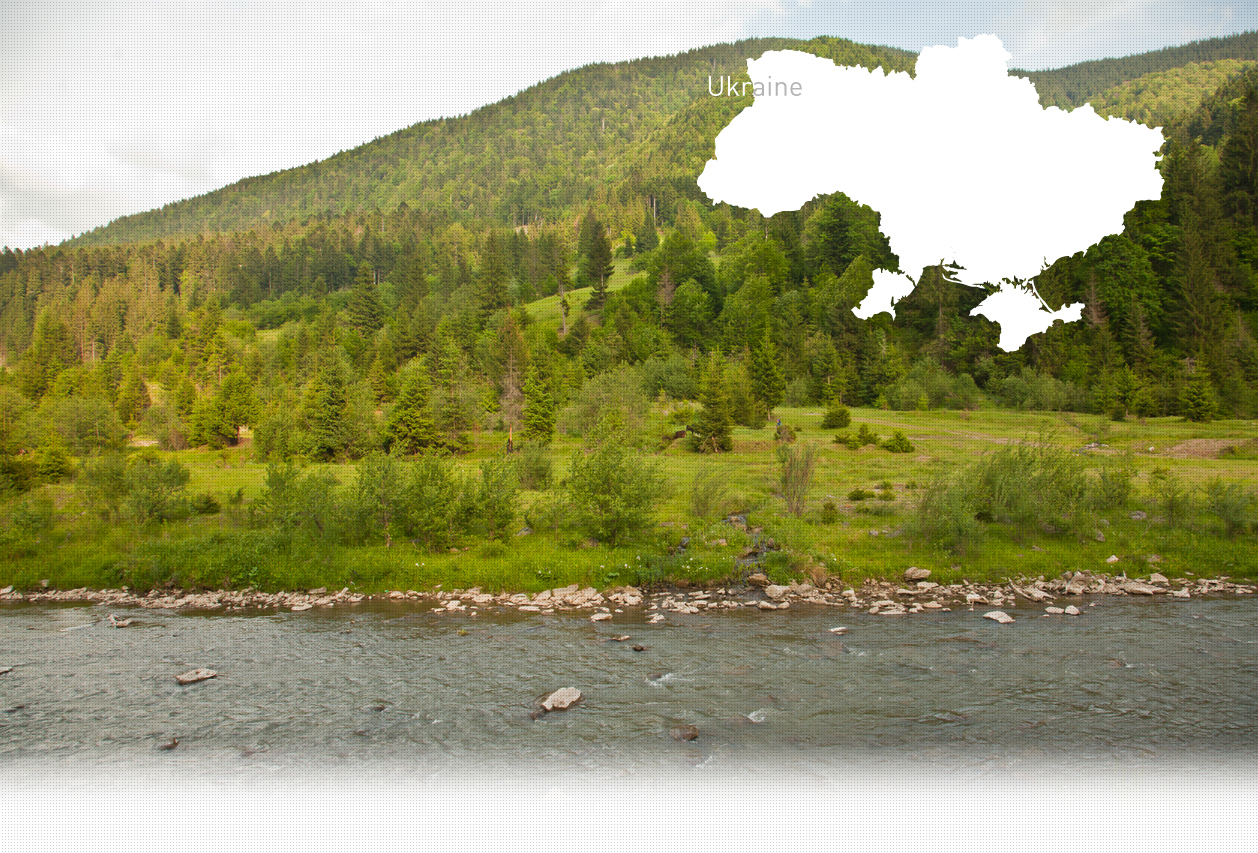
The villages of Akmechetka (renamed Prybuzhzhia in 1945) and Zhovtneve (renamed Tsvitkove in 2016) are neighboring rural settlements located in the former Domanivka district of Mykolaiv Oblast, approximately 25–34 km (16–21 mi) southeast of Voznesensk, near the Southern Bug River.
Akmechetka is the older of the two settlements. The first documented Jewish presence here dates to the 1840s, when several Jewish families leased land and engaged primarily in agriculture, particularly melon cultivation and market gardening. Unlike many neighboring shtetls in southern Ukraine, Akmechetka never developed into a significant Jewish commercial or religious center. By the beginning of the 20th century, most Jewish residents had left the village, and no major Jewish communal institutions are known to have existed there. Under Soviet rule, the remaining Jewish population appears to have been very small, and on the eve of the WWII only a handful of Jews were still living in the village.
Zhovtneve was founded in 1890 and underwent several name changes during the 20th century (Tsvetkovo, Nazamozhne Oktiabrskoye, Zhovtneve). In 2016 the village was officially renamed Tsvitkove. No historical sources confirm the existence of a permanent Jewish community in Zhovtneve prior to the Second World War.
The historical events documented in this study took place in the area between these two villages.
Akmechetka was occupied by German and Romanian troops in August 1941 and incorporated into Romanian-administered Transnistria the following month. The neighboring village of Oktiabrskoye (today Tsvitkove), located a short distance to the east, was occupied during the same period and formed part of the same administrative and security zone.
This area became one of the principal camps of the Domaniovka district, supervised by Romanian Gendarmes and guarded mainly by local auxiliary policemen. Established in late 1941 or early 1942 within a former pig breeding sovkhoz situated in Akmechetski Stavky between Akmechetka and Oktiabrskoye, the camp received Jews deported from Bessarabia, Bukovina, Odesa, and later the Chișinău ghetto, as well as survivors of the Bogdanovka and Domanivka massacres. According to the Soviet Extraordinary State Commission, approximately 4,000 Jews were deported from Odesa to Domaniovka on 10 January 1942; many weak adults and children were shot en route and hundreds died. The survivors were transferred to Akmechetskiye Stavki in May 1942. Volodymyr M., born 1928, recalled a continuous flow of convoys, often exceeding one hundred deportees each, while transfers to the camp continued until at least October 1943.
Conditions in the camp were very difficult. Volodymyr M. reported that prisoners were confined in former pigsties, slept on bare floors and received no food during their first four days. Anna Ts., born 1912, described systematic looting, the extraction of gold teeth, physical abuse and the arbitrary restriction of food deliveries by guards.
Evidence suggests that Akmechetka functioned primarily as a camp of extermination through starvation, disease, and abuse. Nevertheless, some detainees were shot. According to eyewitness accounts, shootings took place in a nearby ravine situated between Akmechetka and Oktiabrskoye. Victims were led there in groups. Anna Ts. stated that shootings occurred either near a well in the ravine or at its bottom, where a trench had been dug. According to her testimony, local auxiliary policemen carried out the shootings under the supervision of German personnel who issued orders and oversaw the operation. Volodymyr M. also recalled the killing of four Jewish escapees, including two young men and two young women, who had allegedly left the camp in search of food. Mykola D., born in 1954, citing his father’s recollections, stated that Jews were shot both near a well and inside the ravine itself, where a trench had been dug. According to his testimony, the slopes of the ravine were covered with Jewish bodies. Bodies were buried in mass graves, and some were later burned, complicating efforts to determine the exact number of victims.
A separate shooting also took place in the same ravine in 1942. According to the testimony of Anna L., born in 1915, interviewed by Yahad-In Unum in Oktiabrskoye, seven Jews had found refuge in the house of a local woman known as ‘Grandmother Rouzia’. Their elegant clothing suggested that they came from an urban and relatively affluent background, possibly from Odessa. They were eventually discovered, taken to the ravine known as Makeyeva Balka, near the well mentioned above, and shot. Soviet archival records corroborate this testimony, stating that in 1942 Romanian Gendarmes shot seven unidentified Jews from Odesa at Makeyeva Balka and buried their bodies in the abandoned well. This episode most likely concerns Jews who had escaped an earlier mass shooting before being recaptured.
The Akmechetka camp was liberated in late March or early April 1944, when only about 150 prisoners remained alive. Archival sources indicate that at least 3,000 people passed through the camp, whereas most local sources estimate the total number of prisoners who perished during the camp’s existence to be around 14,000. The monument erected today commemorates the victims.
Do you have additional information regarding a village that you would like to share with Yahad ?
Please contact us at contact@yahadinunum.org
or by calling Yahad – In Unum at +33 (0) 1 53 20 13 17