1 Killing site(s)
Lyubov H.., born in 1928: “Jews were brought here in winter. They came on foot. There were some men, but most were women and children. They were put in the village’s three stables, which were long buildings, each about fifty meters long and packed full, so there really were lots of them. They stayed there for quite a long time with no right to go outside, guarded by policemen. Local people secretly brought them food, but it was dangerous. My future father-in-law was caught by Romanians who came here regularly from Lidiivka. He was beaten so severely for giving food to the Jews that he couldn’t get up for a week.
I can’t remember exactly long after that, but at some point German and Romanian soldiers arrived on motorcycles. All the Jews were taken to the ravine located just behind the village and shot with a machine gun. Then the soldiers left, and the policemen stayed behind to burn the bodies. They doused them with gasoline and the fire burned completely in a single day. My mother had hidden a Jewish woman under the stove. I don’t know how the policemen, one of whom was a Volksdeutsche from Rastadt, found out. They came to get her and shot her in the same ravine." (Testimony N°YIU1304U, interviewed in Mostove, on November 11, 2011)
Shevchenko is a small village located in the Mykolaiv region, situated approximately 45 km (28 mi) southwest of Voznesensk. It was established in the 1920s during the early Soviet period.
Before 1941, Shevchenko was a small rural agrarian community primarily inhabited by Ukrainians and Russians. Unlike larger urban centers or historic Jewish agricultural colonies in southern Ukraine, the village did not have a permanent, established Jewish population before the outbreak of the Second World War.
Shevchenko was occupied by German forces in August 1941 before being transferred to the Romanian administration as part of the Transnistria Governorate. The Romanian garrison was stationed in nearby Lidiivka and carried out regular patrols in the village, while daily guarding and law enforcement were entrusted to a local auxiliary police force.
According to historical records, in January 1942, German and Romanian forces brought a column of Jews, comprising men, women, and children, with women making up the majority, to the village of Shevchenko. According to local witness Lyubov H., born in 1928, who was interviewed by Yahad - In Unum, the detainees were confinedin three village stables under the direct guard of local auxiliary police as soon as they arrived, with all movement strictly forbidden. Some local residents brought food to them in secret, risking beatings by Romanian soldiers if caught. During their confinement, a number of detainees died from cold and starvation.
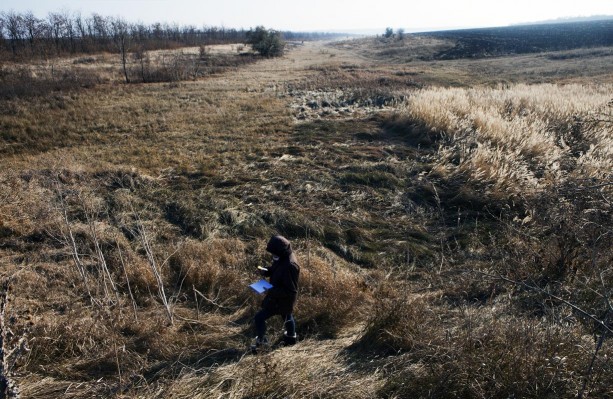
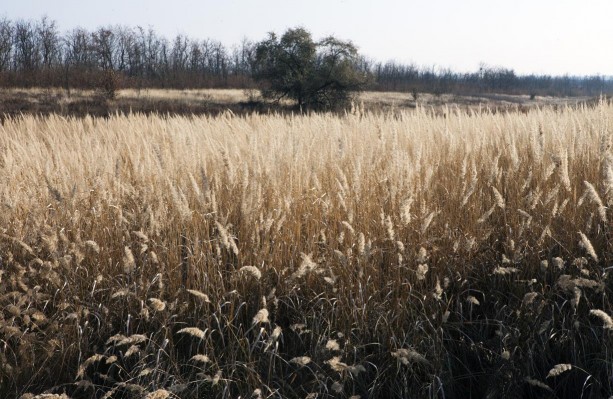
In February 1942, German and Romanian soldiers arrived on motorcycles to carry out the shooting. All Jewish detainees were forced out of the stables and marched in a single group to a ravine located on the outskirts of the village. Lined up along the edge, the victims were shot with a machine gun in an Aktion that began around noon and lasted several hours. According to historical records, approximately 250 Jewish victims were shot in Shevchenko in February 1942.
Immediately after the shooting, the German and Romanian troops departed, leaving the local police to pile the bodies together, douse them with fuel, and burn them in the ravine.
To this day, no memorial marks the killing site to commemorate the victims.
Do you have additional information regarding a village that you would like to share with Yahad ?
Please contact us at contact@yahadinunum.org
or by calling Yahad – In Unum at +33 (0) 1 53 20 13 17