.jpg&f=jpg)
.jpg&f=jpg)
.jpg&f=jpg)
.jpg&f=jpg)
.jpg&f=jpg)
.jpg&f=jpg)
.jpg&f=jpg)
.jpg&f=jpg)
.jpg&f=jpg)
.jpg&f=jpg)
.jpg&f=jpg)
.jpg&f=jpg)
.jpg&f=jpg)
.jpg&f=jpg)
.jpg&f=jpg)
1 Killing site(s)
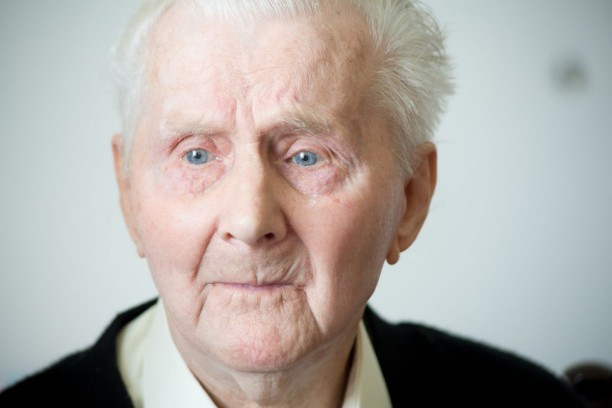
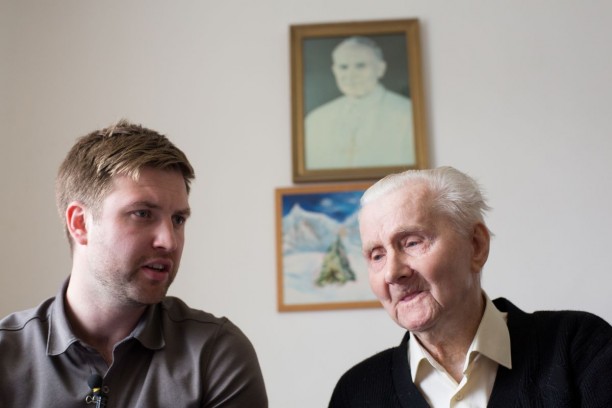
Stanisław K., born in 1935: "Our family house was in Krownica, part of Pustków. Before the war, Pustków was mainly Catholic, though a few Jewish families lived there too. When the Germans arrived, they cleared tens of hectares of forest to build a massive facility with around 100 prefabricated barracks and warehouses. The site had two distinct sections: a comfortable camp for the Germans and a separate, circular-designed camp ("Rings") for the prisoners.
The first transport, consisting of Jewish men from Lublin, arrived at Kochanówka station and then men were marched to the camp. Poles and Russians were brought in later, but most prisoners were Jewish men. They built a road near my house to transport V1 missiles to Blizna. Working all day, they pushed sand carts and laid tracks. The German guards in bluish uniforms routinely beat prisoners and shot two Jews every day. Desperately hungry, prisoners lacked the strength to work efficiently. I sometimes hid in road trenches to throw them bread, which they fought over. Once, a starving prisoner ran into our house just to drink pig slop from a bucket.
These conditions killed vast numbers of prisoners. Groups of four Jews carried the bodies, and sometimes still-living victims, on wooden ladders to Królowa Góra, renamed "Góra Śmierci" (Death Mountain). Bodies of all nationalities were piled on wood and burned continuously. We could see the flames and smoke at night and smell the horrible stench from our house." (Witness N°YIU1009P, interviewed in Pustków, on May 3, 2019)
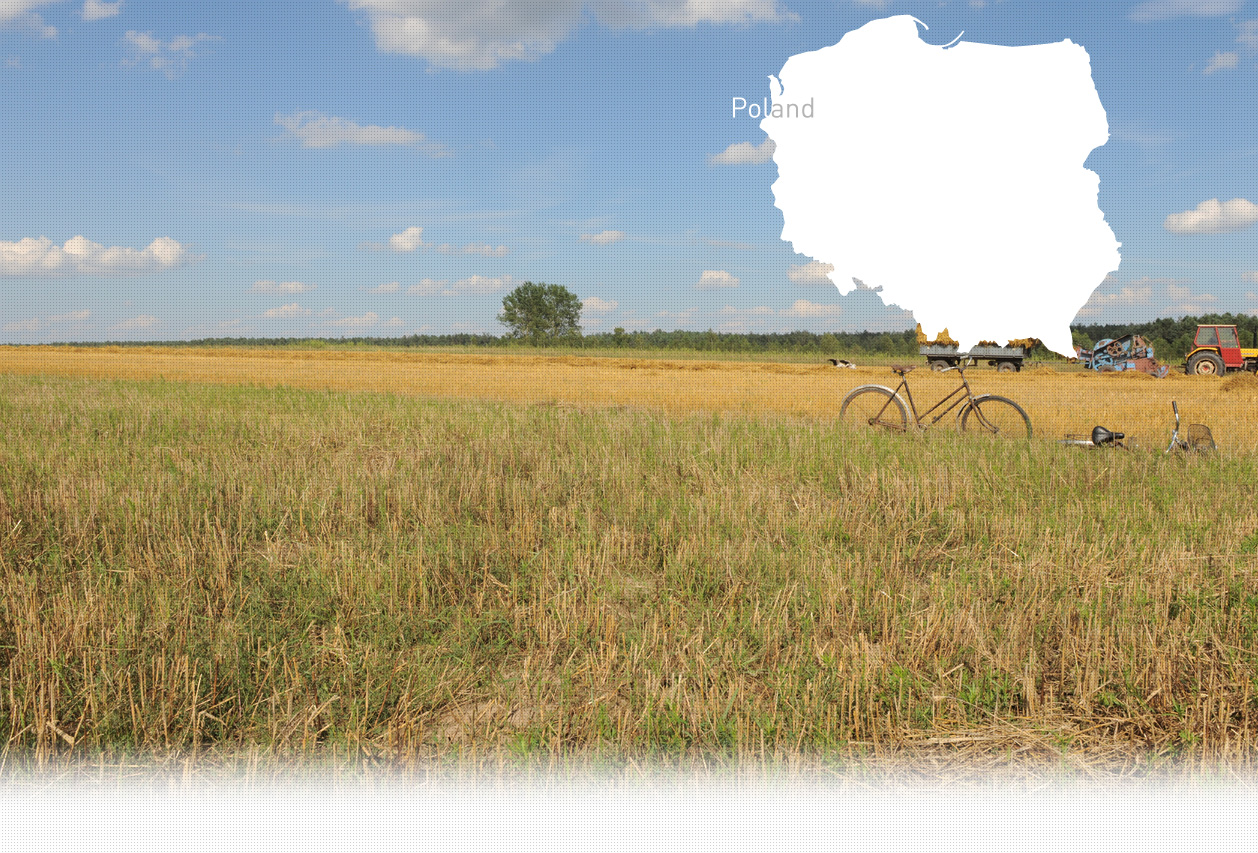
Pustków is a village in the administrative district of Gmina Dębica, within Dębica County, Subcarpathian Voivodeship, in southeastern Poland. It lies approximately 45 km (28 mi) west of the regional capital, Rzeszów, and roughly 280 km (174 mi) south of Warsaw. Before 1939, there was only a small Jewish population in Pustków and the surrounding area. In 1921, 40 Jews lived in Pustków itself, 24 in Męciszów, and 10 in Wola Pustkowska.
Witnesses interviewed by Yahad - In Unum in 2019 recalled Jews living in Pustków before the war. Maria Z., born in 1931, remembered a rabbi named Holender who lived in Pustków near the school. He had a small house of prayer at his home, though the main synagogue and the Jewish cemetery were in Dębica. She went to school alongside Jewish children. Maria also recalled two Jewish farming families, Szyja and Fryma, from nearby Gać.
Following the outbreak of the Second World War, Pustków was selected by the German occupation authorities as the site for a massive SS training facility, which was to feature military infrastructure and shops. To secure the necessary labor force, a camp was established on the site in 1940, where laborers, mostly Polish Jews, were forcibly brought to build the initial complex. Over time, additional camp sections were constructed to hold Soviet POWs in 1941 and Polish political prisoners in September 1942.
In the early stages of camp operations, Jewish laborers from the surrounding area returned to their home towns at night after 10 to 12 hour workdays under SS supervision. From November 8, 1940, prisoners were permanently housed inside the "Lignoza" factory hall at Ring I, where conditions rapidly degraded with reduced food rations, extended hours, random shootings, and violence under SS command. Due to appalling living conditions, the mortality rate was very high in Pustków. Transports arrived continuously from dozens of localities, including Jasło, Radomyśl Wielki, Dębica, Kolbuszowa, Zakliczyn, Dąbrowa Tarnowska, Rzeszów, and Szebnie. On August 7, 1941, the Jewish camp was moved to Ring V under Waffen SS guard. At this stage, the facility held Jewish laborers, who received assistance from the Jewish County Welfare Committee in Dębica and the Polish Red Cross.
During the summer of 1942, as part of Operation Reinhardt, the execution and body disposal site was moved to the base of Królowa Góra, known as Death Mountain, where bodies were burned on open air pyres. Most Jewish inmates unfit for labor were deported to the Bełżec killing center during mass selections in the summer of 1942. In July 1944, as the Red Army advanced, the remaining inmates were evacuated to Auschwitz Birkenau and subsequently to camps such as Mauthausen and Gusen, where the final survivors were eventually liberated.
Between 1940 and 1944, an estimated 15,000 individuals perished at the Pustków labor camp, including approximately 7,500 Jews. Following the liberation of the region, a memorial was erected on the grounds of the former camp to honor the thousands of Jewish, Polish, and Soviet victims who perished at Pustków.
Do you have additional information regarding a village that you would like to share with Yahad ?
Please contact us at contact@yahadinunum.org
or by calling Yahad – In Unum at +33 (0) 1 53 20 13 17