

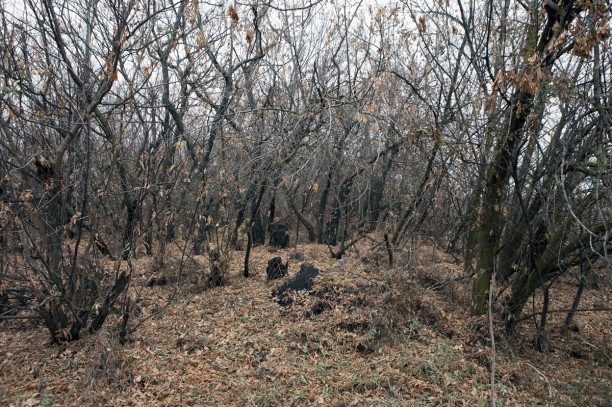
1 Killing site(s)
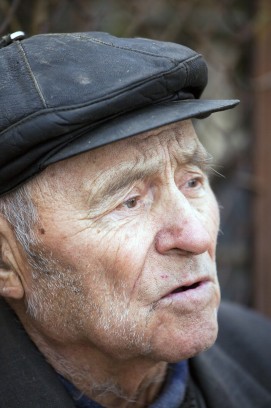
Fedir K., born in 1932: "Columns of Jews from Odesa were regularly brought through our village by Romanian soldiers on forced marches. They would stop in our village for the night, usually in the barn, and the next day they were marched on. Every time a column left, other boys and I would go look in the barns, and every single time we found bodies lying on the ground. They had died of exhaustion or starvation. The local police requisitioned young boys, aged 15 to 17, and forced them to transport the bodies to a field outside the village and burn them there. Once, a column stopped in our club for three nights, I don’t know why. They were kept under guard, but they were able to come out and barter. After that column left, we saw about ten bodies inside the club as well." (Testimony N°YIU1299U, interviewed in Novohryhorivka, on November 10, 2011)
" […] On February 18, 1942, at noon, escorted by armed Romanian soldiers, a convoy of 1,500 people, women, children, and elderly persons, was heading from Berezovka toward Vaselinovo. This convoy was made up of residents of Odesa. At that moment, a German death squad arrived from Vermusovo, Berezovka District, in sleighs, and selected and rounded up 150 people from the convoy, robbed them, took them to a barn, stripped them, and then, in groups of 10, took them to the silo pit and shot them with automatic weapons. […] All 150 people were shot, among them 67 children. Afterward, all the bodies were burned. […]" [Act n°10 drawn by State Extraordinary Soviet Commission (ChGK), on September 4, 1944, p.6; GARF 7021-69-79/Copy USHMMRG.22-002M]
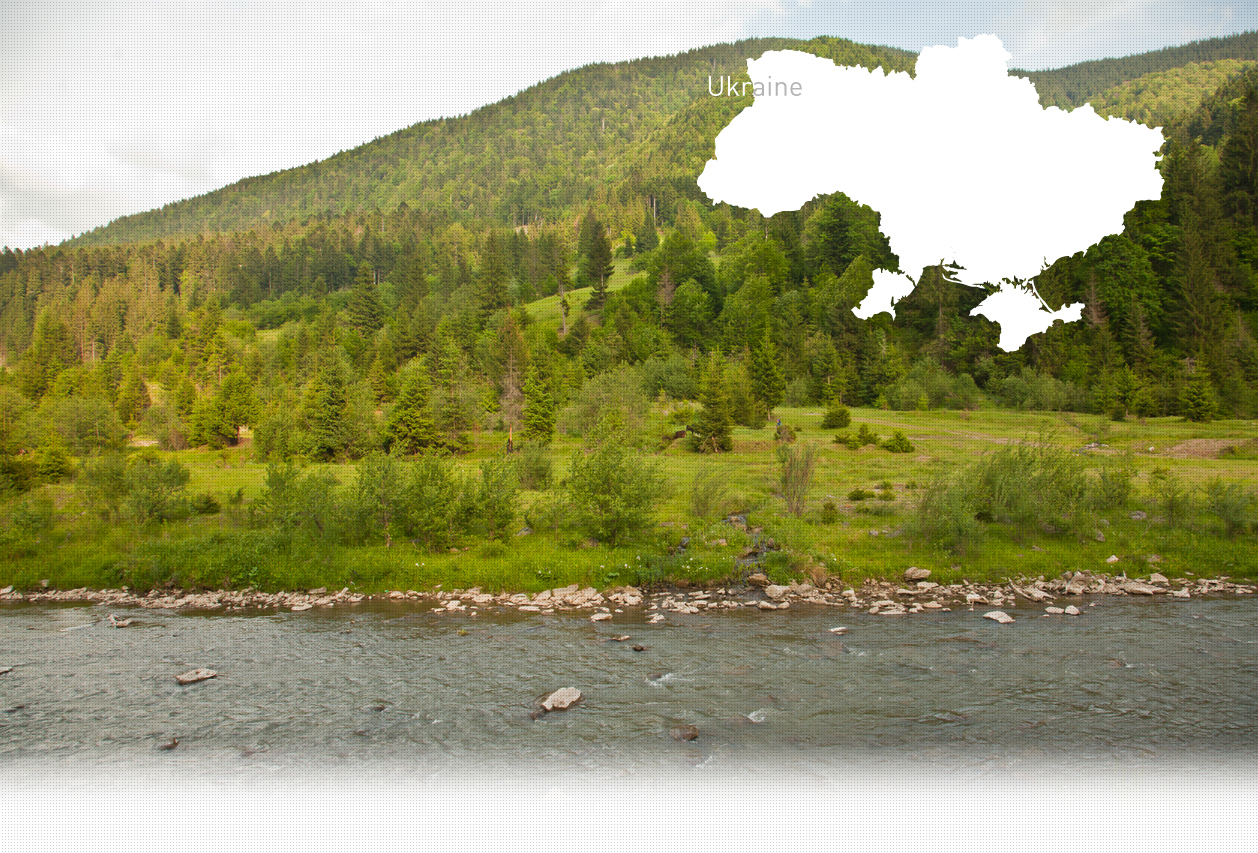
Novohryhorivka (formerly Hadiuche) is a small rural settlement located in the present-day Voznesensk District of Mykolaiv Region, Ukraine. The village is situated approximately 39 km (24.2 mi) southwest of Voznesensk.
No reliable demographic records identifying the presence of a Jewish population in the village before the German invasion of the Soviet Union in June 1941 have been located.
Following the launch of Operation Barbarossa in June 1941, Novohryhorivka was occupied by German forces and subsequently placed under Romanian administration.
According to local witness Fedir K., born in 1932, who was interviewed by Yahad - In Unum, columns of Jewish deportees from Odesa were repeatedly marched through Novohryhorivka under Romanian escort during both summer and winter months. Moving entirely on foot, these groups of hundreds of men, women, and children were temporarily held overnight in local structures, primarily a 200-meter-long stable and, on one occasion, the village club, before being forced onward the following day.
Witness accounts highlight the severe mortality rate along these transit routes. Fedir K. recalled that after each column departed, local children entering the stable consistently discovered the bodies of Jewish detainees who had succumbed to hypothermia and starvation. Local police routinely requisitioned youths aged 15 to 17 to transport these remains to nearby fields for incineration. Typically, two or three bodies were found per group, though up to ten were discovered on one occasion. Because the fields have been continuously plowed since Soviet times, the site where the bodies were burned could not be identified during the investigation in the area.
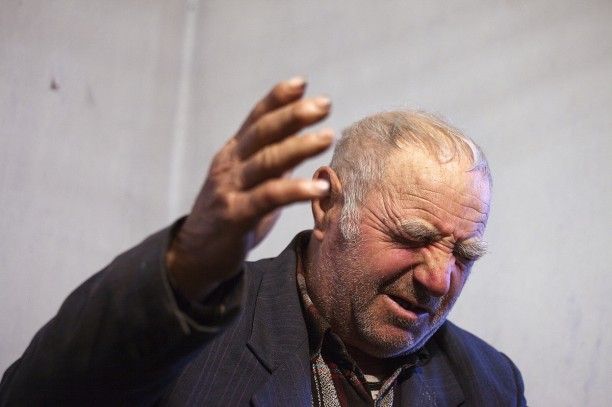
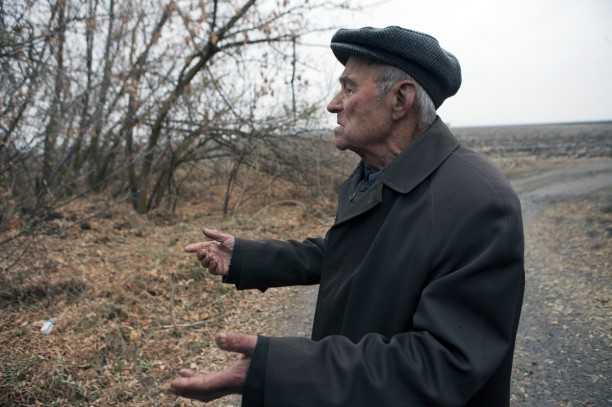
According to Soviet archival records compiled in Novopavlivka in 1944, during one of these marches on February 18, 1942, a group of 150 Jewish people, including 67 children, was taken from the column, shot, and burned in a silo pit. This record is corroborated by the testimony of Mykola Kh., born in 1927, who was among the local villagers requisitioned to transport the Jewish detainees from Novopavlivka to Novohryhorivka. Children, the elderly, and the infirm were transported on carts, while able-bodied Jews were forced to proceed on foot. En route to Novohryhorivka, a German unit intercepted the column and selected a group of people to stay behind while the main column continued ahead. Upon returning to Novopavlivka, Mykola Kh. observed a pile of bodies burning in a roadside silo pit beneath trees at the exact location where the column had been halted. To this day, this killing site remains unmarked, with no memorial commemorating the victims.
Do you have additional information regarding a village that you would like to share with Yahad ?
Please contact us at contact@yahadinunum.org
or by calling Yahad – In Unum at +33 (0) 1 53 20 13 17